
Ep #74: Newborn Monitoring: How Much Is Too Much?
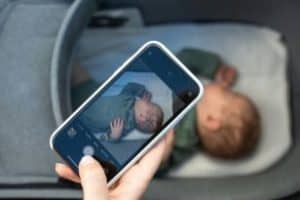
Find the Balance Between Tracking and Chilling
If you’re drowning in a sea of baby apps, video monitors, and spreadsheets of diaper logs, this episode is your lifeline.
Modern parenting comes with more data collection than anyone anticipated, and it’s easy to get lost in it all. But tracking every wet diaper or timed feed isn’t always the answer. Sometimes, it’s about knowing when to put down the phone and trust yourself.
Join me this week as I break down newborn monitoring in a way that actually makes sense. From those first few days when keeping an eye on wet diapers matters, to later months when timing every nursing session becomes overkill, you’ll learn how to find a balance between useful monitoring and obsessive tracking. I share strategies for using apps and monitors as tools – not sources of stress – so you can stay present, enjoy your baby, and not let the data dictate your sanity.
Listen to the Full Episode:
Why This Episode is a Must-Listen for Parents Overwhelmed by Baby Tracking:
- Why tracking wet and dirty diapers matters in the early days and when you can safely stop.
- The problem with apps that track from midnight to midnight instead of actual day/night cycles
- How video monitors can be both a blessing and a curse for new parents.
- When to stop timing nursing sessions and other unnecessary tracking habits.
- The difference between helpful sleep logging and obsessive documentation.
Quick Tips for Healthy Newborn Monitoring
- Track Only What Matters — Focus on essentials: wet diapers, major feedings, and important milestones.
- Set Boundaries With Apps — Limit alerts to avoid constant stress and distraction.
- Use Monitors as Helpers, Not Bosses — Let technology support you, don’t control your day or night.
- Trust Your Instincts — If your baby seems fine, you probably are too.
- Take Breaks from Logging — Step back, breathe, and remember the baby isn’t a spreadsheet.
- Simplify Nursing & Feeding Logs — Short notes are enough; perfection isn’t required.
- Focus on Connection, Not Numbers — Presence matters more than precision tracking.
Parenthood Prep Podcast is Here to Help!
Join the fun and never miss an episode! Subscribe to Happy Family After’s Parenthood Prep Podcast on your favorite app. Follow on Instagram @happyfamilyafter to share your stories or roast your baby (yes, really).
Need real-life support? Learn about our in-home newborn care and postpartum services.
Resources Featured on the Show:
- Enjoying the show? Leave a rating and review to let me know what you think.
- Roast Your Baby! (Come on, you gotta try it!)
- Ep #45: NICU Survival: How to Keep Your Sanity & Find Silver Linings with Margaret Mason Tate
Full Episode Transcript:

How much tracking are you supposed to do when you have a newborn? How obsessed with poop is too obsessed? Stay tuned to find out.
Welcome to Parenthood Prep, the only show that helps sleep-deprived parents and overwhelmed parents-to-be successfully navigate those all-important early years with their baby, toddler, and child. If you are ready to provide the best care for your newborn, manage those toddler tantrums, and grow with your child, you’re in the right place. Now here’s your host, baby and parenting expert, Devon Clement.
Hello, hello, and welcome back to the Parenthood Prep podcast. As you may have noticed, I never really made an official announcement, but we have now gone down to dropping episodes every other Monday instead of every Monday. This is because I have a couple of exciting things I’m working on and I figured we already had such a great backlog of episodes going over all the important topics, sleep and schedules, and all those great things that I was going to focus on some of the exciting things we have coming up that we’re going to announce and release a podcast bi-weekly, which means every other week, not twice a week, that would be fun. Anyway, so for the foreseeable future, the podcast is going to come out every other Monday.
We are back from Burning Man. We just got back to New York last night. I don’t know how much news about Burning Man you get in your algorithm, but there was actually a baby born there this year, which was kind of crazy. We heard about it while we were there. It wasn’t anywhere near where we were, but basically this couple was there, they were staying in an RV and the woman started having stomach pains late at night. She thought she might have appendicitis because it was so painful. And a baby that she did not know that she was pregnant with was born. So that’s a wild start to your life.
It seems like right now everybody’s doing great. They actually helicoptered mom and baby out, took them to the hospital. This is the most Burning Man thing I’ve ever heard. There was an OBGYN and a neonatal nurse nearby who were able to jump in as well as I think a pediatrician, a pediatric doctor that were able to jump in and help with the delivery and, you know, caring for the baby after and caring for the postpartum mother after. And in one of the things I was reading, it said an OBGYN wearing only his underwear, which is, yeah, that’s, that’s Burning Man. So I just thought that was amazing and I’m so glad that everything was okay and that people were able to help and that is a story that they and their child are going to be telling for a very, very, very long time.
And then I know you guys are sick of hearing about it. I promise I’m going to shut up, but I did also want to just talk about how this was our third year going. And much like I said, going to Burning Man is like having a baby, going subsequent times is like having more and more kids because every time you think, okay, I was pretty good this time, but I’m going to make some changes, I’m going to make some tweaks and I’m going to be even better next time. I’m going to have it under control. I’m going to pack lighter, I’m going to have better outfits, I’m going to be more intentional about getting to the things I want to get to and seeing the things I want to see. Or the opposite, I’m going to be less intentional. I’m going to just explore and go with the flow and see where the wind takes me.
And then, you know what, sometimes nature and people and everything get in the way and the experience is just going to be what it’s going to be. So, you know, this year, third time, we’re professionals. We know what we’re doing. And then we got there and the weather was terrible the beginning of the week. There was dust storms, there was rain, not as bad as our first year, but people who had never experienced rain at Burning Man or it was their first year were like, oh my gosh, this one day of rain is crazy. What are we going to do? I joke that we were like the grizzled old war veteran like you weren’t there in ’23, you don’t know what rain is really like.
But that just reminded me so much, you know, the second time around with your next baby or the third time or the 10th time, it’s just always going to throw different curve balls at you. You’re always just going to have a different experience and you’re going to have to learn. And yes, the stuff you’ve done in the past will help you and will guide you and will inform you, but you also need to just let go of a lot of expectations and have more go with the flow. So I think in some ways the first time is the hardest just like having a baby, even if it’s maybe not, you know, the year of the mud or whatever. So you know, just another way that Burning Man is like having kids. And I am done talking about it. That’s it.
Today we are going to talk about a topic that is near and dear to my heart as they all are: monitoring, logging, writing stuff down, keeping track of things when you have a newborn and beyond. Back in the olden days before everybody had smartphones and apps and everything, we would just write stuff down in a notebook. How long, you know, did they nurse for? How many ounces did they take from the bottle? Did they have a pee? Did they have a poop? And you’re tracking these things. I think our parents’ generation didn’t do it at all. But then at some point we started doing it. Some people don’t do it and that’s totally fine.
But in the early days, especially if your baby’s not like a super chunk right away and they want to make sure that their intake is good, possibly if you’re nursing and so you don’t know exactly how much the baby is intaking, you’re going to log their output, their pees and poops to make sure that they are getting something going in. Because if something is coming out, then something is coming in. If you’re seeing a wet diaper every time you change them, they are getting milk because otherwise where would all that liquid be coming from that gets turned into pee? If they are pooping at least once a day in those early days, you are putting food into them because waste is coming out of them.
And that’s really important and that’s really helpful to know, especially if you have twins, because especially if you have twins of the same sex, you’re like, oh, I remember I changed two poopy diapers, but who was it? I’m so tired. I don’t remember. So it is important to log that stuff in the beginning. When your baby’s a brand new newborn, you don’t necessarily need to log their sleep because they’re sleeping all the time. But you do really need to track those wet diapers, those dirty diapers, you know, how often they’re feeding, how long they’re feeding, how much they’re taking. Those things are really important.
Some people log other stuff like spit ups, that kind of thing. Maybe, you know, you keep a baby book and in the log you write down some of your memories, some things that are milestones. Today we gave the first bath, or today grandma and grandpa came over, or Aunt Susie came over and gave us this little outfit. You know, all those things are great to log.
I love a pen and paper log. There are now a lot of apps, which of course there are, with varying degrees, I think, of usefulness. There’s different apps that people like. Some people use a note on their phone, which I also really like. My two big issues with using apps are number one, they generally go from midnight to midnight, which is not really a great way to track a day because it’s not splitting the day into day and night. It’s splitting it into like half the night, then the day, then half the night. And that’s just like when you’re looking at trends and things over time and you’re saying, oh, she had this many, you know, feeds in this 24-hour period, it’s not making it easy for you to start to get into a routine of tracking for sleep and stuff like that.
So, I’ve heard that there are apps now that will let you set the time of day that you want to start, which is great. I have a log that I use for clients. It’s just like an Excel spreadsheet that I print out and we just like write it in the in the printouts if you can believe it. You start the day at 7:00 AM or 8:00 AM or whatever. And then you can see, okay, from 7:00 AM to 7:00 PM they did this much, and then from 7:00 PM to 7:00 AM they did this much. And it makes it easier again to see those trends.
Like for example, if you’re going from midnight to midnight and one night your baby has a big feed at 11:45, and then the next night they have that big feed at 12:15, it looks like that day in between they barely ate. But really, truly, they ate the same amount. It was just that instead of doing that feed at 11:45, they did it at 12:15. So then they have these days with like big feed, no feed, big feed, and you’re like, oh my god, my baby hardly ate today. So just be aware if you are using an app that goes from midnight to midnight, what the issues are with that.
My other concern about people using apps for logging is that I think you get addicted to it. I think you get really stuck on it. I have gone to a sleep training with like a 7-month-old and the parent sits down to like nurse the baby and she opens up the app and she hits, you know, start nursing session. You do not need to be timing your nursing sessions when your baby is 7 months old. Just stop doing that. Just don’t do that. Like, you can note that they fed. I think that’s good, especially if they’re not on a schedule or on a routine. Like I actually love going in and knowing like, you know, when they fed and stuff like that. I don’t need to know how many minutes they nursed for. I want to know how long they slept. I want to know what that looked like. What did the put down look like? You know, did they wake up and go back to sleep at all? All those different things that are important.
So, like I said, in the beginning, you want to log those feeds, you want to log the pees and poops. Once your baby is like out of the woods, the pediatrician is not concerned about their weight gain. We are in good shape, we’re feeding enough. You don’t need to log their wet diapers anymore. It’s fine. They’re going to have plenty of wet diapers. And you will notice if they start having like significant dry diapers. Like, it is so rare, unless you’re changing your baby’s diaper like every hour. It is so rare to open up a diaper and have it be dry when they’re, you know, in that first year that you will notice if like three diapers in a row are dry and it’s something to be concerned about. You do not need to log their pees and poops once you know that they’re on a good track with feeding and that they’re gaining weight. So just get sort of off of that mindset.
And in the NICU episode, we talked about this too, because if you have a baby with any kind of medical need in the beginning, any kind of issue, you are doing all this logging and tracking and the hospital’s doing all this logging and tracking and it feels amazing. But once you’re home, you don’t really need to be doing it as strictly anymore because if your baby is healthy enough to be home, they’re healthy enough to not need every single blink of an eye logged and tracked.
Same thing with monitors. You know, I think video monitors, certainly ones that you can watch on your phone, are a blessing and a curse. My mother says all the time, you know, queen of wisdom, Susan Clement, she says all the time, you slept great because I didn’t hear you unless you were like really kicking off. There was a monitor box I saw at one of my client’s homes. They had just unpacked it a few years ago. And on the box it said, “hear every peep.” Like this was a selling point of this monitor. I was like, oh, dear God, please keep your peeps to yourself. I do not want to hear every peep. I don’t want to. I want to hear the important ones. I want to hear the loud ones. I don’t want to hear the baby’s rolling over in their sleep or, you know, wiggling around in their sleep. I want to hear, you know? Like those are important. I don’t want to hear, you know? Turn the volume on the monitor down.
Also stop staring at it all the time. The number of times the moms are like or the parents are like, I can’t wait until my baby goes down for a nap. And then they put them down and then they spend the whole nap staring at the monitor. Stop doing that. So yes, video monitors are a blessing and a curse. I love them for sleep training because I can really closely observe what the baby is doing. I can see if they’re trying to put themselves to sleep. I can see if they are in distress. I can see if they’re stuck. I can see what’s happening. But mostly it’s to reassure both myself and the parents that they are fine and that they are just figuring out how to work out their feelings and how to get themselves comfortable and how to soothe themselves.
I say sometimes it’s like watching sports like when they’re learning how to roll over and they’ll like start going and they’re like, okay, okay, okay, almost, almost. Oh, they didn’t do it. Oh. Or when they do it, you’re like, yeah, they did it. Oh my gosh. But you don’t need to do that all the time. Once your baby is sleeping well, turn the screen off on the monitor. Also, it’s bad for your sleep to have blue light shining in your face. So turn that screen off on the monitor. Put it down.
If you are out of the house, your baby is with the nanny or with your partner or with your parent or whatever, try not to stare at the monitor all the time. You know, you can check in here and there. That’s great. But try not to stare at the monitor all the time. Also, as a side note, I’ll probably talk about this, but like, don’t stare at your babysitter or your nanny all the time either. It’s weird.
Obviously you can check on them, you can make sure they’re keeping the baby safe, but as a caregiver, the thought of being like constantly watched is so creepy and it makes me worse at my job to think that I am being like constantly stared at. I have just always lived my life as if the parents were going to walk in at any moment. I’m not doing anything bad, but like I sing less now that everybody has nanny cams. I do, it’s true. I don’t want them to hear my mediocre singing. I’m nervous to fart or like scratch my butt. You know, the normal things that you do in your everyday life, you don’t want to think that someone is staring at you while you’re doing them.
Same thing with daycare. I think it’s great that daycares have, you know, live streams and all this stuff so you can check in on your kids during the day. But if you check in on the daycare and you see that your child is crying, maybe it’s because another child is playing with the toy they wanted to play with. Maybe it’s because they just fell on the playground. You know, normal things that happen. You’re going to freak out, you’re going to panic. You’re going to be like, why is my kid crying? What’s going on? What are the teachers doing? You know? So don’t let yourself get obsessed with like checking on your kid all the time because you don’t know what the context is for what’s happening. Give them a little space, same way you’re giving them a little space in their crib, in their room, and you’re not staring at them on the monitor 24/7.
So that is how I feel about monitors. I nannied for a family for years that had, they lived in like an old house and whatever material it was built with, monitors didn’t work. Even an audio monitor. So I would put the baby down and she was sleep trained and she was great. And then when I thought it was, you know, roughly time where she would be waking up, I started kind of hanging out a little closer to her room. I’d stick my ear in. It was a big house too, so like I couldn’t hear her from like every room in the house. You know, every little bit I’d like pop my ear in and see what was going on outside her room.
And when I heard her start waking up and really, and then she would really call me when she was ready to get up. I could hear her if she was like really going. I could hear her from anywhere in the house. But not having a monitor was like kind of freeing. It was kind of nice. Like I just, you know, she got up when she got up. Except for the one time when we moved her from a crib to a bed when she was like two and a half and she got out of bed and fell asleep in the closet and then I went in to wake her up because it had been a really long nap and I couldn’t find her anywhere and I panicked. She was in the closet sleeping on the floor. That’s like the only time that I had wished that I could have had a video monitor on her at that time.
So, monitoring, tracking, logging is important in the beginning. It’s important if you’re sleep training, like if I’m sleep training for you, I’m going to give you a detailed log of every single thing that happened during sleep training because there’s a lot of reasons why you need to know everything that’s going on during that period. But the rest of the time, you do not need to be obsessed with every single blink, every movement, every pee, every poop. Use an app if you want to, but definitely like wean yourself off of it once the baby is doing well. You know, if you’re going to look at your phone while you’re feeding or whatever, look at Instagram, don’t look at the baby logging app. Logging their sleep is a good thing to do when they’re a little older and you don’t need to log the pees and poops anymore. But honestly, just keep a notebook in their room and jot stuff down there.
And then also other people that care for them can use it as well. And certainly you can put your caregivers on the apps and things like that, which is great if you have like a full-time nanny. But like with us, you know, the doulas coming in different times, doing overnights, things like that, working with multiple clients, we usually just pass the information along to the parents and then they have to like log it all in to the app or whatever. So, you know, don’t be afraid to keep it simple. And if you are a person who tends to get really obsessed with every single little detail, try and encourage yourself to loosen up a little bit and just focus on what’s important. You’re going to be able to enjoy your baby so much more when you’re not obsessed with every single little detail of what they’re doing. Bye.
To be sure you never miss an episode, be sure to follow the show in your favorite podcast app. We’d also love to connect with you on social media. You can find us on Instagram @happyfamilyafter or at our website HappyFamilyAfter.com. On our website you can also leave us a voicemail with any questions or thoughts you might have, and you can roast your baby. Talk to you soon.
Thanks for listening to this week’s episode of Parenthood Prep. If you want to learn more about the services Devon offers, as well as access her free monthly newborn care webinars, head on over to www.HappyFamilyAfter.com.