Ep #69: The Egg Donation Journey: How My Frozen Eggs Helped Build a Family
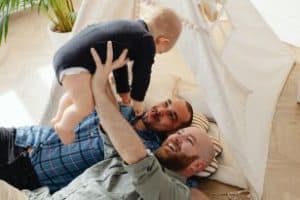
Watching your best friends struggle to build a family while sitting on frozen eggs you’re not planning to use creates a unique kind of tension.
After spending years in the parenting and family creation world, I’ve seen it all – surrogacy, adoption, egg donation, and everything in between. But when my friends Dave and Danny casually mentioned their complicated journey to have a biological child during a Zoom call in 2020, the solution hit me like a ton of bricks: those 15 eggs I froze at 37? Not in my future plans, but they could absolutely be part of theirs.
This week’s episode is a special one: it’s the story of how a spontaneous offer – “Do you want some eggs?” – sparked a three-year journey through contracts, psychological evaluations, FDA testing, and ultimately, the arrival of baby Audrey Joan. From the initial “let’s do this” to the emotional rollercoaster it turned into, this episode is all about how egg donation turned into an unexpected gift of life.
What You’ll Learn from this Episode:
- The extensive legal, psychological, and medical requirements for known egg donation between friends.
- How FDA testing and six-month sperm quarantine protect surrogates in third-party reproduction.
- The practical realities of embryo creation, including typical attrition rates and success expectations.
- Why contracts must address long-term communication rights between donors and children.
- The emotional complexities of being a known donor versus anonymous donation.
Listen to the Full Episode:
Featured on the Show:
- Enjoying the show? Leave a rating and review to let me know what you think.
- Send us a DM on Instagram or on my personal Instagram!
- Roast Your Baby! (Come on, you gotta try it!)
- Ep #42: Exploring the Many Paths to Parenthood: A Fertility Expert’s Perspective with Justine Witzke
Full Episode Transcript:

Something a little different on the podcast today. I’m going to get personal with you guys and tell you the story of my egg donation to my friends and how it resulted in their beautiful baby daughter. Stay tuned.
Welcome to Parenthood Prep, the only show that helps sleep-deprived parents and overwhelmed parents-to-be successfully navigate those all-important early years with their baby, toddler, and child. If you are ready to provide the best care for your newborn, manage those toddler tantrums, and grow with your child, you’re in the right place. Now here’s your host, baby and parenting expert, Devon Clement.
Hello and welcome back to the Parenthood Prep podcast. Today’s episode is going to be a little different. First and foremost, I just celebrated my birthday. Thank you. I know you just said happy birthday out loud while you were listening to this, so thank you. We had a bunch of friends down to our house. My best friend traveled in from Atlanta, and it was just really wonderful. The weather was perfect, and we just spent the whole weekend relaxing and swimming in the pool and playing games.
Oh, I always go to this gay pool bar on my birthday, so this year because my birthday was a Saturday, we went on the Friday, and that was really fun. We just had a really great time. I love celebrating my birthday. I know a lot of people have mixed feelings about it. I happen to have a great birth date, which is at the end of July, July 26th. So it feels like the perfect time of year to have a summer party, and you know, coincidentally, it just happens to be for me. But my poor partner Alex, his birthday is Christmas Eve, so he really kind of gets the shaft when it comes to people celebrating him.
I always try to make it special, you know, like have a totally separate present than his Christmas present and like wrap it in birthday wrapping paper. And my family, when we get together for Christmas, we usually do a birthday cake for him, and then we do something for his birthday in January, which is actually great because in like the beginning to middle of January, nobody has anything to do, so everyone is available and willing to come out, which for my birthday is sometimes harder because everybody’s on vacation or has a wedding or something else. Mostly people are away.
Anyway, so it was my birthday and it was lovely. And speaking of births, I want to talk a little bit more about Miss Audrey Joan, my good friends’ baby and my biological daughter. I thought it would be just interesting for you guys to hear the story of how it all kind of came to be and what the steps in the process were and you know, how we eventually ended up here with our baby, my niece.
So if you don’t know much about fertility or how that all works, I recommend listening to the episode a while back where I interviewed Justine Witzke. She is brilliant. She runs a fertility clinic. She’s worked in the field for years. We talked about all different kinds of things. So there’s a lot of technical stuff, and it’s just really interesting.
And I think sometimes it’s hard for me having been in the field of parenting and family creation and family building for so long that people are not always familiar with that stuff. I think especially men, because you’re not necessarily talking to your guy friends about what they’re going through with their partners and stuff like that. And I’ve just had so many conversations with women who are going through IVF and all these different things. And there are so many people you can follow on social media. It used to be blogs. I used to read a lot of blogs about this sort of stuff because I found it really fascinating, all the possibilities. And it’s just so exciting when someone who’s been wanting a baby for a long time finally gets to have that dream come true.
In our case with Dave and Danny, they sort of knew, of course, they knew all along that they were not going to get pregnant naturally because that’s not how that works. So they knew they wanted kids, but they did not know what creating a family would exactly look like for them. And I had frozen my eggs in 2018 when I was 37, which is a little older than they recommend doing it. But at the time, I just turned 44, prior to that, there was not really great technology for egg freezing. There was great technology for embryo freezing. There was great technology for IVF, but the egg freezing success rate was not very good. And then in the episode with Justine, she explained that the reason for the change is that they literally just figured out a way to freeze eggs better so that they had success.
And so once I started seeing that, that there was a lot of stuff coming out about egg freezing having much better results, I was like, okay, now it’s probably time that I make this commitment physically and financially to freezing my eggs. I’m not sure if I’m going to want kids down the road, but I’m already 37 and I think I would just like to take a shot at it. And it was an investment certainly. At the time, I worked with a new clinic that was running a really good promotion, so I got very lucky that I was able to do basically two cycles for the price of one.
And now a lot of people’s companies are paying for it. Like if you work for a big company that has this as a benefit, you should absolutely take advantage. Even if you’re partnered, even if you’re married, even if you’re not sure if you want to have kids, even if you’re sure you don’t want to have kids, if it is not going to be a huge hardship for you financially, I highly recommend you just take the plunge and do it because there are so many changes, mental and emotional changes that I’ve gone through in the last 10, 15, 20 years.
Like when I was 24, 20 years ago, God, I was sure I wanted to get married by the time I was 27 and have five kids. And then that didn’t happen and I started traveling and I started doing stuff and I realized that I really loved my life without that. And then I kind of got back into the idea that maybe I would have one kid. And then, anyway, here we are. And so I was freezing my eggs in 2018.
And then I kind of just after the next two years got to a point where I was like, well, I’m probably not going to use these. I think I’m over it. I’m not going to have kids. I’m just going to be single forever and date around and maybe have partners here and there, but not the whole marriage and family and that whole thing.
So it’s the beginning of 2020. We’re on a Zoom call because that’s what we used to do, Zoom hangouts with our friends. You remember. And Dave and Danny had just gotten married the previous November. And we were not super, super close at that point. We were friends. They came to my parties, we’d get brunch occasionally, stuff like that, but we weren’t as tight as we later became. And I said, “Oh, you guys have mentioned wanting to have kids. What is your plan? Are you going to try to adopt? Are you going to try to do foster care? Are you going to try to have your own baby with a surrogate?” And they said, “Yeah, we’d really like to do that. We’d really like to have a biological baby, but it’s a really complicated process with egg donation and surrogacy and everything.” And I just, I don’t know, it just popped into my head. I said, “Do you want some eggs?” And they were like, “Uh, yeah.”
And I was like, “Cool. All right, let’s do it.” And at the time, I had 15 frozen eggs, and actually what I thought was that we would even do another cycle since I still felt like I had a little bit of fertility left in me at that point when I was 38. So I went back to my clinic just to do a workup and see what they thought. And the doctor was basically like, “Nah man, you’re too old. Don’t do it.” Which was disappointing and kind of upsetting, but I had 15 eggs. I was like, “Let me give you eight and see what happens.”
Now, you would think that with the eggs already being retrieved and everything already being kind of set, it would have been an easy, an easy process from there. And it was not. Obviously, there’s so much paperwork that you have to do. You have to do a contract, which, I mean, I’m not griping about it. It is so necessary. There are so many important details in there that just, I wish everyone took into consideration before they had a child with anyone.
And something that was really important to me is, this is their baby a million percent. I am not her mother in any sense other than biological, but I know from research and stuff that’s coming out now about adoption and donation and all that kind of stuff, that it is really important to a person’s mental and emotional well-being that they know their genetic family. Not just for practical reasons like medical history and stuff like that, but so that they actually know where they came from. That you look at someone who looks like you and you see yourself in their face.
And a lot of people that come out of anonymous donor situations and grow up, they struggle with that. It’s a struggle. And obviously, you can struggle even if you are raised by your biological parents and they’re horrible, even if you’re raised by your biological parents and they’re great. But I wanted to be sure that whatever children we produce together would always be able to have access to me and to their biological family.
And of course, we’re dear friends, we’re so close. People get married and divorced and then they never want to see their spouse again, or they want to take their kids away from that kid’s parent that raised them. Sometimes for valid reasons and sometimes not. So I wanted it to be in writing, as did they, that there could never be a severance of communication from any of the adults involved. Like if the kid doesn’t want to talk to me, fine, but they can’t keep her from talking to me, and I can’t keep her from talking to me just because I’m mad at them or whatever.
So that all went into the contract. I had to get my own lawyer separate from theirs, which they provided for me, and she actually thought that was great. And she was impressed with some of the stuff that we were doing. And it was really good, I think that I had someone who had my interests in mind. We didn’t exchange any finances or anything like that, but just in the process of doing this. And honestly, it was so long ago. This happened pretty quickly. This was by the fall of 2020, we were having these conversations. We were solidifying the contract. We were doing all that stuff.
We also had to go through psychological evaluation. So we had to meet with the psychologist, the two of them with her, and then me with her, and then all three of us together with her. And it was so funny because they were asking questions, I think they want to make sure that you are prepared to just be the donor and not be the mom, which I have no interest in being. I love that I get to be her auntie and buy her presents and take her on trips and hang out with her and not worry about what school she’s going to go to or anything like that.
So we had the psychological evaluation, but the funny part is, of course, I am a postpartum doula and newborn care specialist. I am a baby expert. You know, and she knew that going in, but she was asking all her standard questions. She was asking Dave and Danny like, “Well, if Devon tries to tell you what to do with the baby, how are you going to feel about that?” And they’re like, “We’re going to listen to her. She’s literally an expert. We want her advice.”
And the psychologist was like, “Oh, yeah, I guess that’s a good point.” Then she’d ask me, “Well, what are you going to do if they do this or they do that and you don’t agree with it?” I’m like, “I don’t care. Say you go over there for Thanksgiving and she’s four years old and she wants to play outside and they let her go outside without a jacket on.” And I’m like, “She’ll come in if she’s cold.” I think kids can be trusted to make those decisions for themselves. And use the car seat right and don’t hit your kids. Like keep them safe. That’s all I care about. Keep them safe and that’s it.
I have to brag a little bit because when we all got together with her for our final conference and discussion, she said that we were like one of the most prepared groups of people she’d ever worked with. We got a gold star in psychology and she was so thrilled for us and so excited for us to take the next steps.
So then the next stage of the process was that they had to freeze and quarantine their sperm for, I think, six months. And I’m not going to go into details about their medical history or anything like that. Obviously, out of respect for their privacy, but let’s just say that process was not simple and straightforward. There were definitely some bumps in the road for that.
And the reason that you have to freeze and quarantine the sperm for that amount of time is because their intention was to use a surrogate. They wanted to be sure that there was not any potential illnesses or diseases or things that, you’re putting your human body material into someone else’s human body and that person is not one of your romantic partners, and they just want to make sure that is going to be safe for the person that it’s going into. So by freezing, testing for all these issues, and then testing again six months later and knowing that you’re still clean and clear and don’t, no issues have developed, that means that your sperm that you froze six months ago is still clean and clear and no issues have developed.
Oh, I also had to, because I originally froze my eggs with the intention of using them myself, I also had to jump through all these hoops of what’s called FDA testing, like for the government. And it’s so funny because they ask you a million such specific questions based on different diseases that happen in different places. Like, is there a possibility you were exposed to malaria from 2003 to 2009? Did you live in any of these countries during the years of 1980 to 1986? And it’s pretty wild. It’s so deep and so intense.
So I had to do that. At the same time, I actually started working with a new clinic, and I did do another egg freezing cycle because at this point in my life, this was now a couple of years later, 2022 or so, Alex and I had gotten a little bit more serious. We had just met when I first made the decision to donate to Dave and Danny. We had gotten a little bit more serious, and he had talked about wanting kids, and I had kind of come back around on, well, maybe I could have kids with somebody who’s a really good partner, which was a thought that I had always had, but I just didn’t think that a really good partner existed, and then I found one. Amazing.
So I had to do all that FDA testing and everything, which I did for my new egg retrieval, and at the same time, they filed that all for the eggs that I had already frozen. So I finally passed the FDA testing. That was probably the most arduous part of the whole process for all of us, just getting through all of that paperwork, this and that and the other thing. Then we had to actually move the eggs from the clinic that they were originally stored at, and then I took my seven that I was keeping to my new clinic where I had gotten four because I froze when I was 41, and you just, your egg reserve goes down a lot in that number of years. And that was in two cycles.
And then they were moving their eight to the clinic that they were working with since they had at this point moved to Philly. And the clinic that I was moving it from in New York was just literally a couple of blocks away, and it was going to be pretty expensive to have a courier do it. So I was like, “Could I just do it myself? Is that something I could do?” And they were like, “Oh yeah, totally.” I’m thinking I’m going to be carrying it down the street in a little lunch cooler. No, no, no, no, no, no.
So, I made Alex take a couple hours off work to come with me because we had to drive the car and parking in that area is terrible. Plus I just wanted some moral support because this was a terrifying process, but it was also really funny. So I went to the first clinic where the eggs were going to end up, so my new clinic, and they gave me this giant thing that looked like a Dalek from Doctor Who, or it looked like R2-D2. It sat in the back seat of the car like a child. It was huge.
And then we drive that over to the other clinic. I bring it up to them, wait for them to put the eggs into this Dalek thing, and I bring it back down, put it in the back seat of the car, bring it back to the other clinic, bring it up, and then they take it and they put the eggs in their freezer. So that was an interesting part of the process, and then they did use a courier to move their eight eggs to Philly because that is much more of a journey.
So finally, we are at the stage of embryo creation, which happened in like October of 2023. And this is something that has been in the works this whole time. This is how long everything took. There were certainly slow periods, like the six-month quarantine and stuff like that, time that we were waiting for certain test results or different things to happen, but basically, we had been working on this process for over three years at that point.
So then we get to the stage of embryo creation, and this was the most nerve-wracking part of the whole process. What on earth is going to happen? This is it. We could get zero embryos, we could get a lot of embryos, we could get four embryos, but they’re all graded poorly, and we don’t know what’s going to happen. So that part was really scary.
And what they decided to do was rather than I guess, I guess some gay couples mix the sperm and then they don’t know what’s what. They decided to fertilize separately. We got two embryos, which was honestly, two embryos for eight eggs is a really spectacular result. There’s always a decent amount of attrition and reduction with this process. You know, you get some out, they don’t all freeze successfully, they don’t all defrost successfully, they don’t all fertilize successfully. So at every stage of the process, you lose a little bit. And we got two embryos, which was huge, huge news. I remember Danny calling me on FaceTime and telling me and just being so thrilled that all the work that we had put in and all the effort that we had put in up to that point was worth it.
And so then they finally were able to start searching for a surrogate. And that is, they don’t want you finding someone until you actually have embryos because if you go through this whole process to match with someone and be talking to them and be ready to move forward with them, and then you don’t have embryos, that’s going to really mess things up and be a waste of everyone’s time and whatever agency you’re working with and all that stuff.
So they don’t want you even searching for a surrogate unless you have someone lined up already. They don’t want you searching for a surrogate. And now, I wasn’t really part of this process with them. This was their thing. So I know that they worked with a surrogacy consultant who we’re actually going to be interviewing here on the podcast. She’s wonderful. She really knows the whole industry inside and out, and there’s a lot of sort of disreputable and shady behavior that goes on, and she is just on a crusade to protect the surrogates and to protect the families and just make sure that everything is on the up and up with this whole process because there are just a lot of ways that it can be misused, mistreated, taken advantage of.
People get approved to be surrogates who really shouldn’t be approved for various reasons just because the agencies want to be able to find surrogates for people, which can be hard to find. Anyway, we’ll talk about all that with her. But basically, that part of the journey was theirs. And I know that they were looking and they had a few potential candidates, but nothing was really panning out.
And then a friend of theirs down in the Philly area that they worked with, the lovely, lovely Anna, volunteered to do it for them, and she offered to be their surrogate. She was a mom of three kids, and she had, you know, successful, healthy pregnancies and pretty easy deliveries, and she really wanted to help them make a family. And honestly, I complain about how arduous the process was for us with all the paperwork and the blood work and the driving the Dalek from place to place, although that was more for me than for them. But she really did the hard part. I mean, carrying that baby, that huge baby for nine months was really, she did the work. God bless her. We love her. Surrogates are special, special people.
So then it went, all went pretty smoothly from there. They did the transfer around Halloween of ’24. So that’s now a full year from when we got the embryos. Of course, once you even land on the surrogate, it takes a while to actually do the contract with them and get that whole thing processed and get ready to do that transfer. I know there’s a lot of physical, medical stuff that the surrogate has to do to get ready for the transfer and all that.
So then they put the embryo in and she stayed, got pregnant, stayed pregnant. It was pretty much an uneventful, textbook pregnancy, all standard stuff. My family has really big babies, so I, you know, had kind of warned them in advance to tell whoever was working with them that this baby was probably going to be pretty big. And Anna, I’ve gotten to meet her and spend time with her. She’s lovely. She’s very short. And but she did, she did comfort me that her third child was 10 pounds, so she was used to carrying a big baby. So I was like, okay, good.
And I’m just going to get emotional now. And now they have a baby. And, you know, it kind of stinks that it’s a much more complicated process than just two people doing it and making a baby. But it’s so, so, so worth it, and they are just the best dads, and I just love seeing them with her and taking care of her and just, you know, finally having their, finally having their dreams come true. And it is just the most amazing feeling to be part of.
The funny thing is that everyone keeps like saying like, “Oh, you did such an amazing thing for them. You gave, you know, such a gift and all this stuff.” And I’m like, honestly, they gave me a gift. Like this is the best thing that’s ever happened to me. I get to be a part of this kid’s life. I get to love her and care about her and also get the benefit of the genetic credit for all of her, all the cool stuff that she does. I get to see my parents in her face.
So they asked me what my name was going to be, like what I wanted her to call me. And I couldn’t really think of anything at first that I loved. And then I decided that I am her deadbeat dad or her Disneyland dad, whatever you want to call it because I get to take all the genetic credit. You know, I got to be part of her creation, but then I don’t have to take any responsibility for anything from here on out.
So I decided I want to be Aunt Didi, which is short for Disneyland Dad or Deadbeat Dad, and also my nickname, Delvadine. So it’s kind of perfect. I also think it’s easy for babies to say. So I’m going to be Aunt Didi, and I’m very excited about that. I told my friends, our other friends that were really close to, I told her mom, her and her mom, and she was like, “Oh, I don’t like that. I think it should stand for devoted donor.” So, you know, it could be that too. Kind of whatever you want.
But yeah, it’s just, I just, this story has such a happy ending and I’m so thrilled. And everyone is just so happy, and there’s a lot of ways to make a family, you know.
—
To be sure you never miss an episode, be sure to follow the show in your favorite podcast app. We’d also love to connect with you on social media. You can find us on Instagram @happyfamilyafter or at our website HappyFamilyAfter.com. On our website you can also leave us a voicemail with any questions or thoughts you might have, and you can roast your baby. Talk to you soon.
Thanks for listening to this week’s episode of Parenthood Prep. If you want to learn more about the services Devon offers, as well as access her free monthly newborn care webinars, head on over to www.HappyFamilyAfter.com.
Enjoy the Show?
-
- Don’t miss an episode, follow the podcast on Apple Podcasts, Spotify, or RSS.
- Leave me a review in Apple Podcasts.