Ep #103: Baby Clothes: Tips for Buying, Storing, and Saving Money
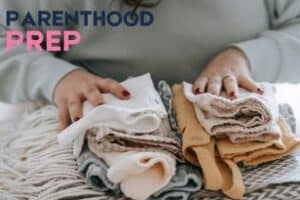
What babies actually wear, how to shop ahead, and what to do with all those outgrown outfits.
Baby clothes are adorable. The tiny outfits, the little sweaters, the ridiculous pants. What’s not to love? Well, spending money on clothes your baby never wears, buying the wrong size for the wrong season, and discovering an entire forgotten wardrobe after your kid has already outgrown it. That’s less adorable.
In this episode, I’m sharing my favorite tips for buying, storing, and saving money on baby clothes, wearing both my newborn care specialist hat and my very enthusiastic auntie hat. We’re talking about what newborns actually need, why zippers are your friends, how to shop end-of-season clearance sales, and why thinking ahead about sizes can save you a surprising amount of money.
I’ll also walk you through my system for organizing clothes by size and season, what to do with outgrown outfits, and how to keep those precious pieces you want to save for years to come. Whether you’re preparing for your first baby, shopping for a growing toddler, or staring at a mountain of hand-me-downs, you’ll come away with practical ideas for making baby clothes easier, cheaper, and a whole lot more fun.
Listen to the Full Episode:
Why This Episode Is a Must-Listen for Parents Buying and Organizing Baby Clothes:
- What newborns actually need to wear and why those adorable little outfits often go unused.
- Why zippers, easy diaper access, and practical clothing choices make the early months easier.
- How to buy baby clothes in the right sizes for the seasons your child will actually wear them.
- Why shopping end-of-season clearance sales can save you money on future wardrobes.
- How to organize clothes by size and season so nothing gets forgotten or outgrown before it’s worn.
- What to do with outgrown clothes, hand-me-downs, and special outfits worth keeping.
- How to properly store heirloom baby clothes and preserve them for years to come.
Quick Tips for Buying, Storing, and Saving Money on Baby Clothes:
- Keep newborn clothes simple – Those teeny dresses and fancy outfits are adorable, but newborns spend most of their time sleeping, being swaddled, and needing diaper changes. Stock up on practical footed sleepers instead, preferably with two-way zippers.
- Think about seasons before buying sizes – A six-to-nine-month winter outfit is not particularly useful for a baby who will be that age in July. Do a little calendar math before buying clothes ahead or giving them as gifts.
- Shop the clearance sales for next year – End-of-season sales are your friend. If your child will be two next summer, look for summer clothes in 2T when this year’s summer merchandise goes on clearance. Future you will appreciate the savings.
- Buy outfits that actually go together – Matching sets and mix-and-match pieces make getting dressed easier. A random adorable shirt is lovely, but if nobody knows what pants go with it, there’s a good chance it’ll spend its entire life in a drawer.
- Store clothes by size and season – Use labeled zipper bags or another easy storage system for clothes your child hasn’t grown into yet. That way, you can pull out the next size when you need it instead of excavating a giant mystery bin.
- Don’t save everything your child outgrows – Keep the clothes that are still in good condition and likely to be worn again. Stained, worn-out, or perpetually ignored outfits don’t need to become treasured family heirlooms.
- Ask your favorite auntie for help – If organizing baby clothes sounds like a nightmare, see if a friend or relative would genuinely enjoy doing it. Some people love sorting little outfits into seasonal wardrobes. I am absolutely one of those people.
- Store special pieces properly – For heirloom outfits you want to preserve for years, Margaret recommends acid-free archival boxes and tissue paper, with extra care around metal fasteners. Those precious little sweaters deserve better than being tossed into a random plastic bag.
- Wash new clothes before your baby wears them – New clothing can have finishing treatments and other residues from manufacturing and shipping. Give everything a wash first, especially for sensitive newborn skin.
- Use the free printable labels – I’ve created editable seasonal clothing storage labels so you can keep track of sizes and years without making your own system from scratch. Find them at HappyFamilyAfter.com.
Episodes Related to Baby Clothes:
- Ep #37: Time Management Hacks for New Parents: How To Get Things Done With a Baby
- Ep #90: How to Set Up Your Home for Baby Without Losing Your Mind
- Ep #100: Baby Sleep, Baby Clothes, & Baby Tips, Oh My! A BTS 100th Episode Celebration
Parenthood Prep Podcast is Here to Help!
- Join the fun and never miss an episode! Subscribe to Happy Family After’s Parenthood Prep Podcast on your favorite app. Follow on Instagram @happyfamilyafter to share your stories or roast your baby (yes, really).
- Need real-life support? Learn about our in-home newborn care and postpartum services.
- Resources Featured on the Show:
- Enjoying the show? Leave a rating and review(opens in new tab) to let me know what you think.
- Roast Your Baby!(opens in new tab) (Come on, you gotta try it!)
- Grab my printable seasonal labels for organizing your baby clothes
Full Episode Transcript:
(opens in new tab)(opens in new tab)
Do you want to hear some great tips and tricks about buying, storing, and saving money on baby clothes? Stay tuned.
Welcome to Parenthood Prep, the only show that helps sleep-deprived parents and overwhelmed parents-to-be to successfully navigate those all-important early years with their baby, toddler, and child. If you are ready to provide the best care for your newborn, manage those toddler tantrums, and grow with your child, you’re in the right place. Now here’s your host, baby, and parenting expert, Devon Clement.
Hello and welcome back to the Parenthood Prep podcast. It’s been a little while since I’ve recorded because we tend to record these things in batches, and I have a bit of exciting news, which is that I got a new desk, which is to say that I have a desk at all. Previously, I was working with this little side table because when I do work on my computer, I tend to sit on the couch or sit on my bed. I’m not really a desk work girly. But with recording, of course, I want to be sitting nicely and have my microphone out and everything, and you can’t really do that on the bed or the couch. So I’ve had this sort of makeshift setup for the last two and a half years that I’ve had the podcast, and it’s not great. And now I have a real desk, so I am finally a big grown-up girl in the podcast world. So very excited about that.
Today, we’re going to talk about one of my favorite topics. I know I say they’re all my favorite topics, but this one is really great: baby clothes. And what is more fun or adorable than little baby clothes? There’s just so much to say about it. And I guess when I’m talking to clients about baby clothes, the advice I give is much more practical. But I am coming to you today wearing two hats. One is the postpartum doula, newborn care specialist, baby podcaster hat, and one of them is the auntie hat, which is a very different hat that has a very different perspective on baby clothes. So we’re going to talk about some practicalities, and we’re going to talk about some fun stuff.
So first and foremost, do not buy clothes for newborns. Don’t buy cute little outfits for them, cute little dresses. Don’t bother. You’re not going to be dressing them. They hate getting dressed. They hate having their bodies manipulated. They want to be warm and cozy. They’re swaddled a lot of the time anyway. They’re sleeping a lot. And frankly, in pictures, they look cuter just in a little swaddle blanket or a little onesie. Those footed sleepers are your best friend in the early days, no matter what season your baby’s born in. So just little footie sleepers for the whole kind of zero-to-three-months period, the newborn stage, the zero-to-three-months stage.
Some babies never wear the newborn size. Some babies go straight to zero to three months. They say don’t buy newborn stuff, but then sometimes your baby’s small and you have no newborn stuff. I would say get a couple of things unless your family’s like mine and you haven’t had a baby under 9 pounds in over 50 years. Babies in my family do not fit into newborn clothes. But if you guys are on the petite side and you’re expecting a petite baby, get some newborn-size sleepers. They outgrow them so fast, it’s crazy. So get hand-me-downs if you want, whatever, but they’ll go from newborn to zero to three months. And then generally they’re in the zero to three month for about three months.
And then when they’re about three, four months, that’s when clothes really start to be cute, start to be a little more functional. You can put them in some different things. You’re changing their diaper a little less frequently. They’re not having as many diaper blowouts where you’re changing their outfit a million times a day because they’re having a diaper blowout every time they poop. So just lots of practical reasons to stick to those sleepers in the early days. And really, most newborns are kind of scrawny and they’re all scrunched up, and you put a little outfit on them and it just looks weird. People, of course, I ooh and aah when people show off the clothes they got for their newborns. And then they say to me, it was a waste.
Easy, the footie sleepers, get ones with zippers. Honestly, they’ve stopped even having snaps. Most of them are zippers now, and they’re the two-way zipper, which is so great because that means you can unzip it from the bottom, leave their top nice and cozy. I’ll even leave their top half swaddled sometimes and just undo the pocket part of the swaddle, unzip from the bottom, change the diaper, get them all zipped back in without having to completely strip them down, which is awesome.
A lot of the sleepers now come with magnets, which you think, amazing, I don’t even have to zip a zipper. The magnets just stick to themselves. And I like the magnet ones. They’re fine, but they do get stuck to the inside of the washer and the dryer, and they sometimes don’t dry quite right, or they just stick to the metal drum of the dryer and it’s a little annoying. So zippers are definitely your friends. Snaps are great too. I like snaps. Some people don’t. I’m a snap girly from way back, but as we’ve already established, I’m pretty old school because I’ve been doing this job for such a long time. I’m like an old grandma. I’m like, “Back in my day, they all had snaps.”
I think a lot of the advice you’re going to see is, “Avoid buttons at all costs.” Yes, you don’t want a fancy sleeper that’s little tiny buttons. But you know what? If your baby’s six months old and it’s their Christmas outfit and there’s some little buttons on it, you’re going to deal with it the same way we deal with our fancy clothes being a little more high maintenance and a little more work to put on. So I wouldn’t say you need to go out of your way to avoid buttons completely, but in your everyday clothes, you certainly want things to be as easy as possible. So zippers are certainly the winners there.
Putting together outfits. Now, some people, you might be a fashionista or a fashionisto or whatever’s the male version of that. That’s great. I am jealous. I cannot put an outfit together to save my life. So I really love when the baby clothes come pre-made into outfits. And so many companies already do this. Carter’s, obsessed with Carter’s. They are the best. Everything comes put together, not only in outfits, but a lot of times they’re mix-and-match. They’ll be a couple of different tops with some different pants. Children’s Place is another good one. Gap to a lesser extent, but Gap has more like separate pieces that work together. I just bought Audrey these cute pink jeans with a little heart patch on them, and I know that I can put that together with lots of different plain or regular tops, and that’ll be easy to do. And her dads can figure that out too.
Definitely think about separates as they get older, but when they’re little babies, having those outfits already put together with the tops and the bottoms or the jumper and the shirt underneath is just so, so easy and great, especially when you’re gifting, like, giving somebody a really cute little single piece is great. But what I’ve really seen in my years of working with families, varying degrees of interest in their baby’s wardrobe and fashion-ness, is that those single pieces do not get reached for nearly as often as the pieces that are already in outfits, ready to go, just so easy to put on. So thinking about that.
What size should you buy if you’re buying a gift for a baby or getting stuff for your kids for the future? You want to think about the seasons. And I know this sounds dumb. At least it sounds dumb to me, but you would be shocked at the number of times I have been helping clients cut the tags off their baby gifts and get them washed and ready or put them away for the future.
And for some reason, this memory stands out. This was a gazillion years ago, but this baby was born in this time of year, November, in the fall. And someone had given him a gift that was an outfit, a six to nine month size outfit that was super wintry. It was a turtleneck and corduroy overalls and dark colors. And I showed this to the mom, and I was like, he’s going to be six months old in May. He’s going to be in six to nine months, from May to September. Can you envision putting him in this outfit in June? Like, no. And so it ended up going right into the giveaways because you’re not going to do that.
So you want to think about what size are they going to be in the different seasons. You can even make yourself an easy, handy size chart, and you can give it to your family members that are always buying clothes for your child. So grandparents, aunts. My mother is constantly asking me, “Oh, I saw this summer outfit for Audrey. What size should I get?” And I just tell her, she’s going to be two in July, so she’s going to be in 18 to 24 months in the spring, and then she’s going to be 2T in the summer. And she’s on the bigger side, so I’m leaning towards 2T for everything summer and spring. I think she’s going to be out of the 18 to 24 months before it’s hot high summer in June or whatever.
And the reason why we’re thinking about this in advance is because you can buy stuff on clearance at the end of the season for next year. So I just bought her all this summer stuff so, so, so cheap in this next size that she’s going to be, in 2T for next year. And now she has practically her whole summer wardrobe ready to go that I got on a mega sale. I got Christmas stuff after the holidays last year, mega sale. All the kids’ stores have these huge sales: Janie and Jack, Carter’s, Gap, Gymboree- they all have these big sales.
Now, something you’ll hear a lot is that different brands will have slightly different sizes. And I’m sure we all know that from buying our own clothes, especially women or people who wear women’s clothes. The sizing can be wildly different. You might be a size eight in one kind of jeans and a size 14 in another kind of jeans. They’re just all over the place.
So you do want to have a little bit of a sense of the brands and what they’re like, but there’s usually enough of a window with baby clothes that they will be able to wear them for some amount of time. I will say that I find that clothes that are mostly stretchy, so your more casual brands, again, your Carter’s, your Gap, Old Navy, those are going to fit them a little bigger and are going to last a little longer than stuff like Janie and Jack or the fancier stores that have sort of a woven cotton material. But obviously cotton can be stretchy too. You know what I mean, though, a woven versus a knit that’s not going to have as much stretch, that’s not going to have as much give.
So your fancy dresses, your button-down shirts, your khaki pants versus your stretchy sweatpants, those kinds of things, you want to err on the side of getting a little bit bigger size because they tend to run a little small. So just thinking about that stuff when you’re buying your end-of-season clearance for the following year.
And again, when you are gifting, think about the seasons. Think about when is this baby being born. You don’t have to know when they’re going to be four months and two weeks. That’s complicated math. Know what size they’re going to be in six months. Know what size and season they’re going to be in a year, and then go half-half in between those.
A baby that’s being born now in the fall, they’re going to be six months next spring, next summer, and then in between is going to be the winter. So they’re going to be three months in the winter, six months in the summer, nine months at the end of the summer, and then a year next fall, winter again. So just write that down for yourself. Keep it easy. Keep a note on your phone.
Clothing gifting can be tricky because sometimes you don’t know the parent’s taste, you don’t know necessarily what kind of stuff they like. But it’s so sweet and wonderful. And what I find is that most families, even if they’re given a gift of clothes that they don’t love, they’re going to put the baby in it and take a picture and send it to you, and then you’re going to get to have a picture of the baby in that thing that you bought them or made them. I make a lot of baby gifts. I make baby sweaters. And I’m always kind of having in mind, am I making them a size six-month sweater? They’re going to be six months in July. They’re never going to wear this sweater. So thinking about those seasons as well.
Now, when you’re buying this stuff in these bigger sizes, I was talking to a client recently about buying the clearance stuff for my niece, and she’s like, “Yeah, but then I’m going to forget about it.” But you don’t have to. I mean, I’m famous for this, but when it comes to Audrey’s stuff, what I do is I bought online these clear, pretty big zipper bags with handles. I got a six-pack of them. And I made labels for each of them that show what size they are. And there’s her stuff for the next season, the season after that, the season after that.
And then there’s a bag that’s just much bigger stuff because she’s gotten some hand-me-downs from her cousins, and some gifts and some hand-me-downs from friends. I’ve bought her some stuff in bigger sizes when I was, we were traveling, and I really wanted to get her these hand-embroidered dresses in Vietnam, but they didn’t have baby sizes. The smallest size they had was like 3T, and she wasn’t even born yet, but I got it for her. And then I put it in this bag that she has of bigger sizes.
So then every season, we just pull out the next size bag, we pull out the next season bag, and we take those clothes out, and then we take the things that are too small, and we put them into the too-small collection.
I usually sort through the stuff that’s too small rather than throw it all in together, because some of it is not keepers. It’s gotten ratty, or it was already multi-hand-me-down, and now is no good anymore. It has a stain on it, or I noticed it wasn’t something that they were putting her in or enjoying, and I’d rather they hand it down to someone else rather than save it for their next baby who’s also not going to wear it.
So you do want to be a little bit judicious about that, but honestly, we also just have a too-small basket that everything goes into, and then when we have time, we go through it. And by we, I mean me, because I’m basically the director of her wardrobe and her dads appreciate that. You may be interested in that, or you may put it on your mom or your sister or a family member that is really interested in things that you don’t have time for or are not interested in.
Honestly, if any of my friends was like, “Would you overhaul my baby’s closet the way you do to hers?” I would be like, “How soon can I come?” I would love that. Is my own stuff organized? No. Or I have other people to organize it for me. But organizing other people’s baby clothes is the best. I’m obsessed.
So if you’re like, “Devon, this sounds amazing, but I do not have the energy or the wherewithal to do this with my children and everything else going on,” see if your child-free friend wants to do it. See if your most fashionable auntie wants to come over and help you get their clothes organized. I bet you they will absolutely jump at the opportunity.
Another tip, stain spray. Stain spray is your best friend. OxiClean spray, I really like. There’s this new one for babies that everybody’s raving about. It’s called Miss Mouth’s Messy Eater Stain Treater. People love this stuff, and I think it’s pretty natural. It doesn’t have a lot of super harsh chemicals.
Wash your baby’s clothes before you put them in their clothes because they are covered in all kinds of chemicals, and baby skin is very sensitive. I am particularly militant about this because I am very sensitive to brand new clothes, and I always have to wash my stuff before I can wear it or else I get a rash. Your baby might be fine, but it’s just a good idea to give those a wash before putting them on your baby because they do put a lot of finishing treatments and stuff so that they look nice in the store, so that they look nice while shipping, and that can be pretty harsh on your baby’s skin.
And of course, I was talking to Margaret about this episode because we kind of go over our ideas together, and she said, “You should talk to them about preserving clothes.” And I was like, “What do you mean?” And she’s like, “Well, you know, heirloom clothes.” I was like, “What are you talking about?” She’s Southern. They do this in the South. If you are in the South, I love this for you. You have these precious items that you want to store for your next kid or even for your grandbabies.
So your Southern bestie has given these tips: store in acid-free archival boxes. You can buy them at Container Store. Wrap in acid-free tissue paper. Slip a little acid-free tissue in under metal enclosures to prevent rust. Put in a plastic tub with a few cedar blocks to repel bugs and store high on a shelf. And if you want to label, only label the box, don’t put any tags on the garment at all. That makes sense. I could really see that being a problem, especially acid-free.
Oh, speaking of tags, when you buy the clothes for next season and stuff like that, I like to leave the tags on so that when I pull them out next year, it’s like a little hit of dopamine. “Oh, look at all this brand new stuff.” We just went on a free shopping spree. It’s nice to prep them in advance too, but it’s just kind of fun to pull stuff out and be like, “Oh, I remember when I bought this at the store.” And you kind of get that little shopping dopamine hit. So feel free to do that, but that’s just from year to year.
If you’re buying something that you’re storing away for years, take that tag off because it’s probably not acid-free. I remember acid-free being a big deal when I was making scrapbooks. So acid-free tissue paper, put it under any snaps or metal that’s on those baby clothes, put it in a plastic tub with a few cedar blocks. Thank you, Margaret. Thank you, Southern Auntie, for teaching us how to store heirloom baby clothes.
As part of this episode, we have a little gift for you all, a free gift that is a printable. I just absolutely went overboard and made these cutie patooties seasonal labels for Audrey’s clothing storage bags, and they’re so precious. I want to share them with you all.
So if you go to our website, happyfamilyafter.com, you will be able to find this printable, or we will post it on Instagram as well, and you’ll be able to see that, and you’ll be able to go to a link that will give you a Canva file where you can edit the years and the sizes, or you can just download a PDF that has everything with all the years and the sizes. I’ll put some blanks so you could just fill it in with a marker if you want to. And it’s just a great way to keep things saved and organized rather than having a huge bin with just every different size in it.
And the cool thing about the bags versus storage tubs is that they only take up as much space as the stuff that’s in them. So right now, her bag for next spring, next summer are pretty full, but her bag for next fall isn’t because we just took out the clothes for this fall. So that is not an empty bin that’s taking up a ton of space. It is now basically flattened because it only has a couple things in it, and it only takes up as much space as the clothes that are inside it. So I highly recommend organizing your baby’s clothes that way, letting somebody else do it for you, whatever you want to do.
If you have any tips, tricks, questions, suggestions about baby clothes, we would love to hear them. Find us on Instagram. Find us on our website. You can also leave a voicemail while you’re there. And send us pictures of your babies in cute outfits because why not? I will talk to you soon.
To be sure you never miss an episode, be sure to follow in your favorite podcast app. We’d also love to connect with you on social media. You can find us on Instagram @happyfamilyafter or at our website, happyfamilyafter.com. On our website, you can also leave us a voicemail with any questions or thoughts you might have, and you can roast your baby. Talk to you soon.
Thanks for listening to this week’s episode of Parenthood Prep. If you want to learn more about the services Devon offers, as well as access her free monthly newborn care webinars, head on over to www.HappyFamilyAfter.com.